Trigger finger or stenosing tenosynovitis is a common medical disorder of the hand. It is characterised by the catching or locking of the involved flexor tendon. When a tendon is inflamed or swollen, it may not fit properly into the tendon sheath that surrounds and supports it. Trigger finger is one of the most frequent cause of hand surgery consultation. A conventional treatment to release the constricted tissue (A1 pulley) is open surgery. Open surgery has multiple drawbacks; (1) it requires a relatively large incision over the affected pulley, which often leaves a visible scar, (2) the subsequent healing process of the hand is long, painful and inconvenient for a patient and (3) the operation requires a highly trained medical professional and an operating theater, which increases the expenses altogether.
Description
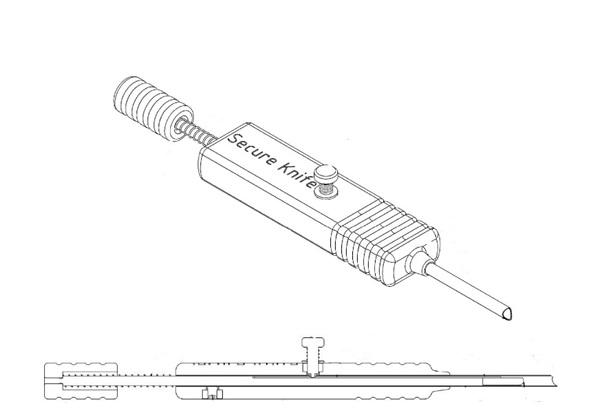
The inventors have identified and developed a minimal invasive device and a corresponding procedure to treat trigger finger in an outpatient clinic.
STAGE OF DEVELOPMENT
Inventors have demonstrated the efficacy of this new device in a prototypemodel.
ADVANTAGES
This new device is safe, release of the A1 pulley can be done in the operating theaters as well as an outpatient clinic. The operation can be realized in the consulting room (no operating room and anesthetist required). Furthermore this device and new procedure is safer (tendons, subcutaneous tissues, arteries and nerves) than other minimally invasive techniques already described in the past.
INTELLECTUAL PROPERTY
Priority date: February 19th, 2021.
European Patent Application filed in the nameoftheCHUV.
COLLABORATION TYPE
PACTT offers to grant exclusive or nonexclusive license to industrial partners able to develop and commercialize the technology.
REFERENCE
IDF 05/18