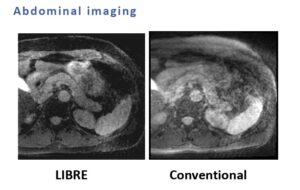
Today’s MRI-based cardiovascular markers rely heavily on either manual segmentation or opaque end-to-end AI prediction tools, which can limit scalability and clinician trust. This may lead to imprecise delivery of an appropriate care, as the clinician must rely on means and estimations. Accurate assessment of cardiovascular health from MRI remains limited by the difficulty of quantifying fine-scale structures such as trabeculae carnae, which have emerging relevance as early biomarkers of disease progression
TECHNOLOGY OVERVIEW
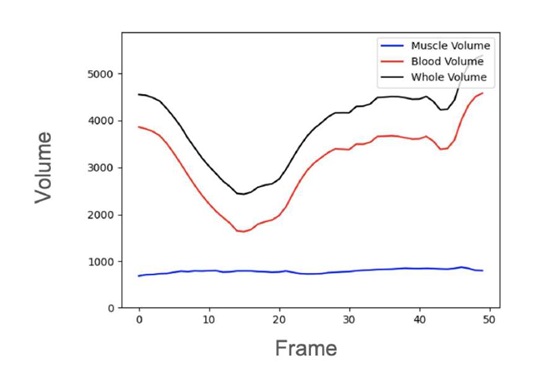
Building on state-of-the-art segmentation and interpretable AI, the inventors have developed a new method which extracts detailed anatomical and functional markers that overcome the resolution-dependency and thresholding limitations of existing tools. The invention introduces a robust, interpretable method that enhances standard cardiac MRI analysis by extracting high-value biomarkers—including trabecular morphology and related parameters— without the drawbacks of threshold-based techniques. Furthermore, the developed algorithm and method allow dynamic analysis of a factor as compared to today’s practice using e.g. Mean of Ejection fraction to provide a diagnostic.
APPLICATIONS
- Clinical Cardiology / Radiology
- Early detection and monitoring of cardiomyopathies (e.g., LV non-compaction).
- Improved assessment of ventricular remodeling in athletes and aging populations.
- Objective biomarkers for patient stratification.
- Pharmaceuticals & Clinical Trials
- Sensitive imaging endpoints for drug efficacy evaluation.
- Enhanced inclusion/exclusion criteria for cardiovascular studies.
- Imaging & AI Companies
- Integration in MRI analysis suites, radiology software platforms, and post-processing tools.
- Enabling next-generation cardiac MRI biomarkers.
COMPETITIVE ADVANTAGES
- High-precision trabeculae quantification independent of voxel resolution and intensity thresholding.
- Enhanced early-stage CVD markers beyond standard volumetric metrics
- Clinician-interpretable output (clear segmentations + derived biomarkers).
- Scalable to diverse MRI datasets, including multi-vendor and multi-center studies
STAGE OF DEVELOPMENT:
Technology Readiness Level : 4-5
INTELLECTUAL PROPERTY
Priority patent application filed in Oct. 2025
The KT UNIL-CHUV is welcoming discussions with industry to refine use cases and validate market needs. The KT is also looking for development partners and offers to grant exclusive or non-exclusive license.
REFERENCE: IDF52-24